The Nobel Prizes in physics and chemistry are often described as rewards for sudden breakthroughs. This year's two prizes tell a different story: decades of work on ideas that colleagues doubted.
Physics: a detector made of ice
The physics prize, announced on 6 October, went to Francis Halzen, an 82-year-old Belgian-American physicist at the University of Wisconsin–Madison, "for decisive contributions to the IceCube Neutrino Observatory and the discovery of high-energy neutrinos of astrophysical origin".
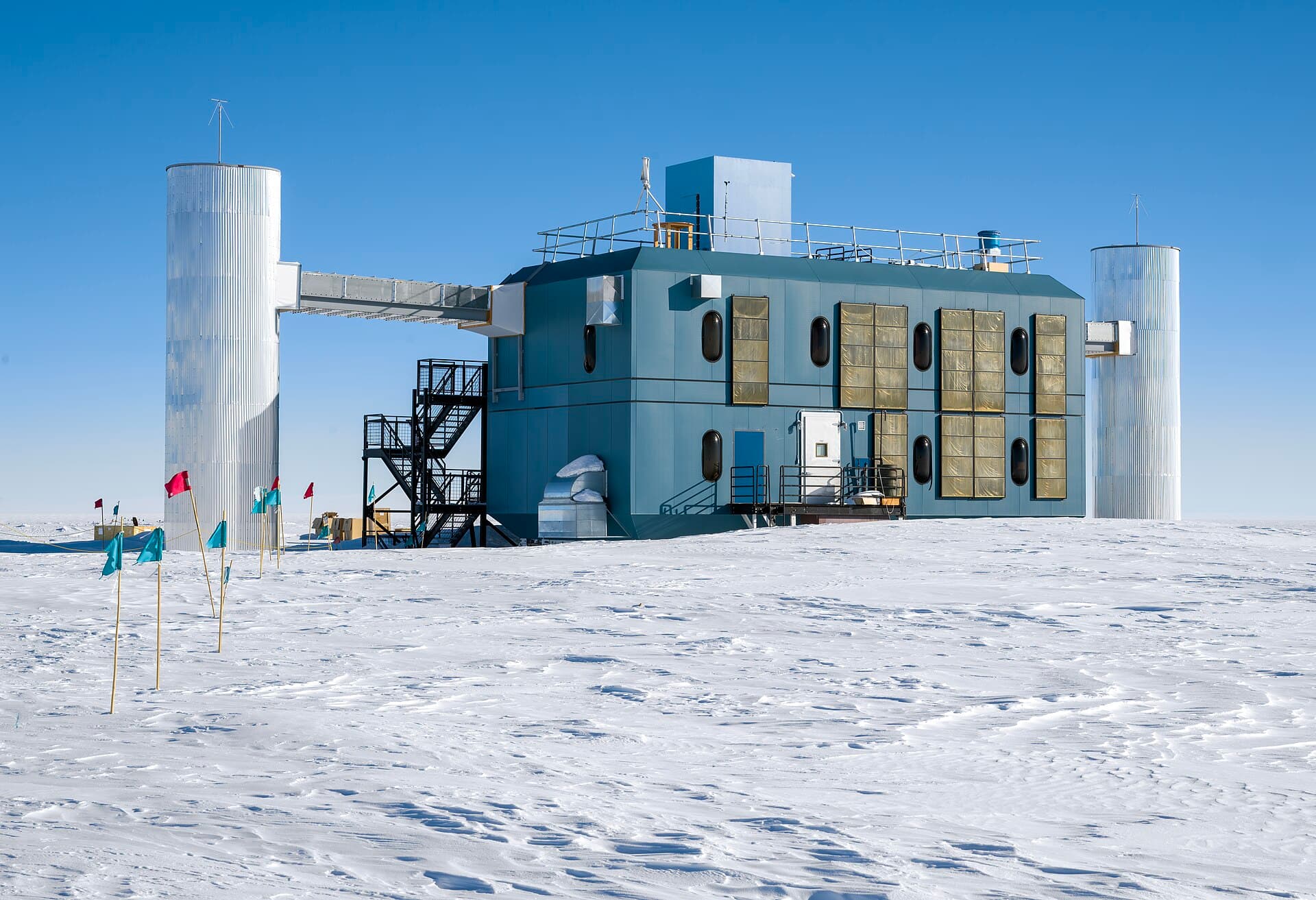
Neutrinos are tiny particles with no electric charge and almost no mass. Trillions pass through every person every second without leaving a trace, which makes them extraordinarily hard to catch. IceCube's answer was to bury light sensors around 2,500 metres deep in the Antarctic ice and wait for the rare flashes produced when a neutrino does collide with something. The observatory, operated by UW–Madison with funding that included the US National Science Foundation, detected neutrinos coming from far beyond our galaxy.
Halzen has said that sceptics once dismissed the idea as charming but unworkable.
Chemistry: left and right hands
The chemistry prize, announced on 7 October, went to Henri B. Kagan of Université Paris-Sud in Orsay and Kenso Soai of the Tokyo University of Science, "for the discovery of non-linear effects and autocatalysis in asymmetric organic synthesis".
Many molecules come in two mirror-image forms, like left and right hands. In medicines the difference can matter enormously, because the body may respond to one form and not the other. Kagan showed that a catalyst that is only partly one-handed can produce a product that is more, or less, one-handed than expected. Soai found a reaction in which the product catalyses its own formation, amplifying a tiny imbalance into an almost pure result. Together, the discoveries help explain how chemists make single-handed drugs, and offer clues to why life on Earth uses molecules of only one handedness.
The common thread
Both prizes reward projects that took decades and had no guarantee of success. IceCube needed years of construction at the South Pole before it produced results. The chemistry stretched over a career. For universities and funders under pressure to show quick returns, that is a useful reminder: some of the most important science only pays off if someone is willing to wait.
Sources
- Francis Halzen wins 2026 Nobel Prize in Physics, Reuters via Daily Maverick
- UW-Madison professor Francis Halzen wins Nobel Prize for physics, Wisconsin Public Radio
- Henri Kagan, Kenso Soai win 2026 Nobel chemistry prize, Reuters via Khaleej Times